
By: The Economist
February 21, 2019
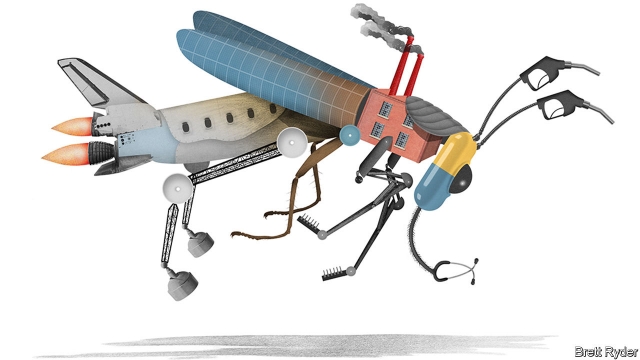
Industrial conglomerates have long been considered the megafauna of the corporate world: big beasts like mastodons, who were condemned to extinction by spear-wielding corporate raiders in the 1980s. But a better analogy is with cockroaches because, against the odds, conglomerates have refused to die out. They flourish in most climates and are highly adaptive. And they have long been considered pests—at least to shareholders and business-school professors, if not to their numerous employees.
Today the industrial world is in full cockroach-extermination mode. There has recently been a slew of proposed break-ups and spin-offs, most notably at America’s General Electric (ge), United Technologies Corp (utc), DowDuPont and Honeywell, and at their European counterparts, ThyssenKrupp, abb, and Siemens. utc’s Greg Hayes, a strapping chief executive who drives a pickup truck and tells it like it is, says that even Warren Buffett’s Berkshire Hathaway and Jeff Bezos’s Amazon are too big to manage. While investors tolerate Berkshire and the digital conglomerates for now, the double standard will not last for long.