
By: Tech News
May 09,2019
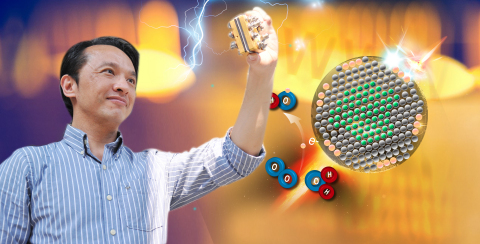
Scientists have long been struggling to develop high-performance fuel cells as environmentally friendly power in electric vehicles. However, Prof. Chen Tsan-Yao of the Department of Engineering and System Science (National Tsing Hua University, Taiwan) has recently made a major breakthrough by using ultrasonic waves to make tiny grooves in the surface of various materials, which in conjunction with an atomic-scale platinum catalyst can be used to double the alkaline fuel cells (AFCs) efficiency.
This atomic-scale catalyst increases the oxygen reduction (cathode reaction) current intensity by tenfold, with no degradation for eight months of continuous operation, while reducing the production cost by 90 percent; such cells have a lifespan of two to three years. This groundbreaking research has been published and selected as a focus paper of Energy Materials in the February issue of Nature Communications. Prof. Chen said that he is currently developing a quantum-size-correlation in catalyst for making cells even cheaper and more efficient.