
By: The Guardian
December 10, 2017
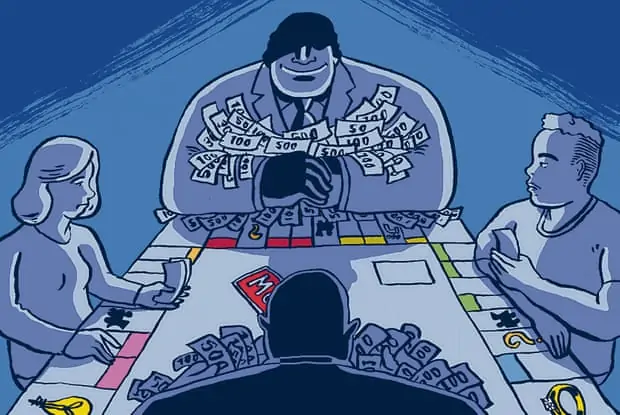
We live in a world of corporate goliaths and the trend to gigantism is accelerating. The new era of hi-tech data capitalism has an embedded proclivity to monopoly. The bigger the network, whether Facebook or Google, the more valuable it is to be connected. Big is good in the digital universe, while even bigger is better.
Meanwhile, analogue capitalism, confronted by the challenge of the new, is reacting by consolidating and merging into ever larger entities. Unless they do, comes the reply to any challenge from national competition authorities, they won’t have the heft and scale to meet the new competition. Increasingly, we are surrounded by the most awesome concentration of corporate power in the history of capitalism. In every industry, reported the Obama administration last year, the market power of the biggest companies has been growing and mark-ups and profit margins with them. America’s era of the robber barons in the late 19th century had nothing on this.
Last week came another small milestone, in Britain. Hammerson, a property company few will have heard of, swooped on its rival, Intu, even less well known, in a £3.2bn bid. Yet the outcome will affect us all. Many major shopping malls – London’s Brent Cross, Birmingham’s Bullring, Manchester’s Trafford Park, Oxfordshire’s Bicester Village – will be owned by the same company. Hammerson will be the arbiter of how we shop: what stores are positioned where, in what mall and at what rent; it can even determine the restrictions on forms of permissible public activity in its private spaces.