
By: Annie Lowrey
Feb 23, 2017
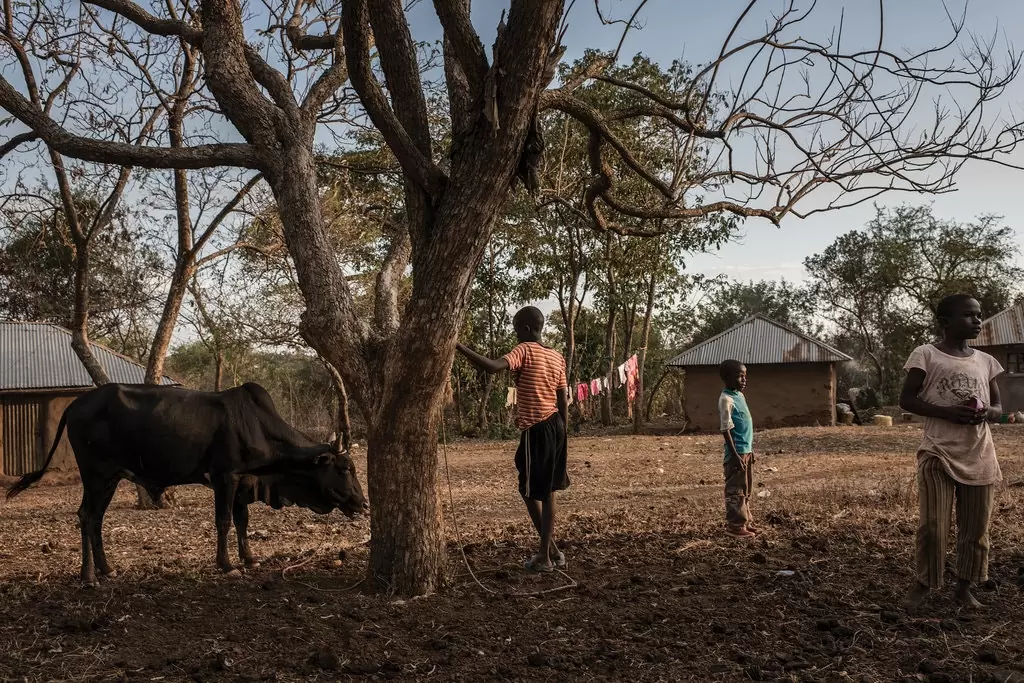
The village is poor, even by the standards of rural Kenya. To get there, you follow a power line along a series of unmarked roads. Eventually, that power line connects to the school at the center of town, the sole building with electricity. Homesteads fan out into the hilly bramble, connected by rugged paths. There is just one working water tap, requiring many local women to gather water from a pit in jerrycans. There is no plumbing, and some families still practice open defecation, lacking the resources to dig a latrine. There aren’t even oxen strong enough to pull a plow, meaning that most farming is still done by hand. The village is poor enough that it is considered rude to eat in public, which is seen as boasting that you have food.
In October, I visited Kennedy Aswan Abagi, the village chief, at his small red-earth home, decorated with posters celebrating the death of Osama bin Laden and the lives of African heroes, including JaKogelo, or “the man from Kogelo,” as locals refer to former President Barack Obama. Kogelo, where Obama’s father was born, is just 20 miles from the village, which lies close to the banks of Lake Victoria. Abagi told me about the day his town’s fate changed. It happened during the summer, when field officers from an American nonprofit called GiveDirectly paid a visit, making an unbelievable promise: They wanted to give everyone money, no strings attached. “I asked, ‘Why this village?’ ” Abagi recalled, but he never got a clear answer, or one that made much sense to him.