
By: M.H.
July 31, 2019
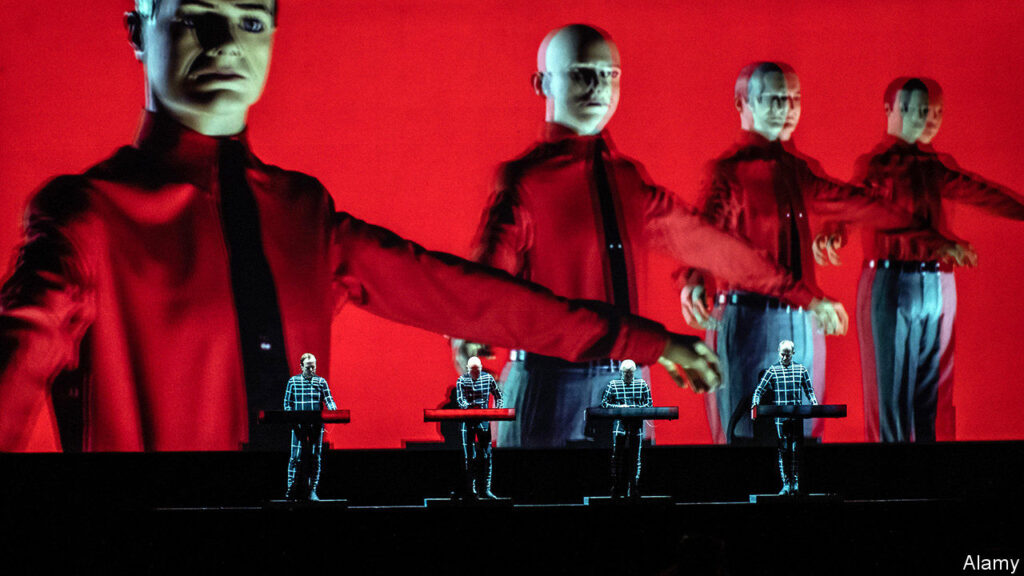
THE THORNIEST question in popular music at the moment is this: who owns a melody? This week two court cases addressed the issue. In California, a jury decided that Katy Perry’s song “Dark Horse” had plagiarised the beat of “Joyful Noise”, a track by Flame, a Christian rapper. Meanwhile the European Court of Justice (ECJ) ruled in favour of Kraftwerk, a pioneering German electronic-music group, in their 20-year-long case against Moses Pelham and Martin Haas. The hip-hop producers had used a two-second sample from Kraftwerk’s “Metall Auf Metall” in the song “Nur Mir” without seeking permission. The ECJ decided that any recognisable sample from a recording should only be used if the original producers had authorised it. Modified, unrecognisable samples could still be used without authorisation, the court clarified.
In 1991 sampling in America—the home of hip-hop—was forever altered by Grand Upright Music Ltd v Warner Bros Records, a federal court case. Grand Upright Music successfully argued that Biz Markie, a Warner artist, should not have taken a sample from the Gilbert O’Sullivan song “Alone Again (Naturally)”. Since then, American artists have had to seek permission from the copyright holders before using excerpts of a record (or take care to sample from records so obscure that no one will notice).